
Stefan Corbett and WJ Steyn, SwiNE Nutrition Management
Behind every high-performing sow herd is a well-developed gilt pool. In today’s pig production systems, gilt development is no longer just about reaching the point of insemination, it is about laying the foundation for a sow’s entire reproductive lifetime. From the number of piglets born alive in her first litter to her longevity across multiple parities, long-term performance begins with how and the rate she is being reared at.
Yet on many farms, gilt rearing is still guided by age-based calendars instead of strategic developmental goals based on physiology. True gilt development cannot only be measured by calendar days alone. At SwiNE Nutrition Management, our work with herds across diverse climates, genetic lines, and systems has consistently shown a clear pattern: growth rate and growth rate patterns from weaning to first service determines not only a gilts chances of conceiving, but also her lifetime productivity.
Growth rate is more than a metric. It is a key performance driver in our herds.
The window of opportunity
From weaning onward, gilts must be reared with deliberate intent and clearly defined developmental goals. This critical window defines the sow’s entire reproductive future. It establishes her physiological ceiling, enabling or restricting the development of her skeletal frame, uterine capacity, metabolic reserves, and overall reproductive potential.
Producers often say, “We’re hitting our average target weights,” but that tells only part of the story. A more meaningful question is: “Are we reaching those weights with the right body composition, at the correct pace, and under optimal nutritional and environmental conditions?” Just as importantly: “How far off target are our fastest- and slowest-growing animals?”
When growth is unbalanced, the consequences are predictable:
- Too slow: Puberty is delayed, skeletal and uterine development fall behind and the gilt enters service underdeveloped and lacking essential reserves.
- Too fast: Excess fat is deposited prematurely, compromising structural soundness and reproductive organs remain immature.
Both cases result in the same outcome: fewer piglets born alive, earlier exits from the herd, and lost productivity—ultimately causing economic losses.
A Phase-Based Rearing Mindset
We advocate for a phase-based gilt development program, one that aligns each rearing stage with the animal’s physiological needs. At every step, the goal is not merely to grow a pig, but to build the foundation of a durable, high-performing, multi-parous sow.
- The Rearing Phase: Weaning to Puberty
This often-overlooked stage is where lifelong reproductive potential is first established. Upon arrival on the farm, gilts encounter a range of stressors, including new pathogens, social grouping, and dietary changes. These challenges can compromise immunity and disrupt early growth trajectories.
The key objectives during this stage include:
- Supporting recovery and adaptation without long-term developmental setbacks
- Encouraging lean tissue and organ growth while avoiding excess fat
- Strengthening the skeletal system to support her future frame
- Promoting immune adaptation to local conditions
Pre-arrival interventions also play a crucial role. Practices such as creep feeding, early gut health support, and socialisation, when initiated by the genetic supplier, can offer long-lasting benefits. It is equally important to avoid high-energy overfeeding at this stage, as fat deposited early is difficult to reverse and can hinder later performance.
- The Development Phase: Puberty to First Insemination
This phase lays the foundation for long-term reproductive success. Once gilts begin cycling, nutritional strategies must shift to support the maturation of the reproductive system and prepare the animal for pregnancy.
Focus areas include:
- Development of fully functional reproductive organs, where early mammary gland and uterine development is key.
- Establishing consistent hormonal cycling and sexual maturity.
- Continued tissue growth to ensure optimal body condition at insemination.
Reaching a target weight is not sufficient. The gilt must arrive at first service physiologically mature, with adequate body reserves to support gestation, lactation and long-term sow performance.
Growth Monitoring: The Gold Standard
What gets measured gets managed, or at least is able to be managed.
Routine monitoring, through weighing, P2 backfat scoring, and ADG, is essential for early intervention. The objective is not to achieve perfection, but consistent improvement by reducing variation and making informed adjustments before developmental issues become irreversible. Streamlining the data collection process reduces human error, time and labour required. By implementing scales that automatically upload data we greatly improve the quality of data collected, while reducing the time it takes.
SwiNE Nutrition has been collecting gilt performance data over the last 7 years, and have build up a vast dataset of weights and growth development data of rearing gilts. This dataset today consist of over 40 000 individual gilts being followed from weaning through multiple parities. This data is from various genetic lines, different production systems and climatic regions in southern Africa. Based on this info, we see certain trends, and can share some key recommended benchmarks.
Gilt growth should be intentional, steady, and data-driven, not reactive. A consistent monitoring program is the cornerstone of long-term herd performance. We often inhibit modern animals with improved genetics for growth, leanness and reproduction unnecessarily based on old targets.
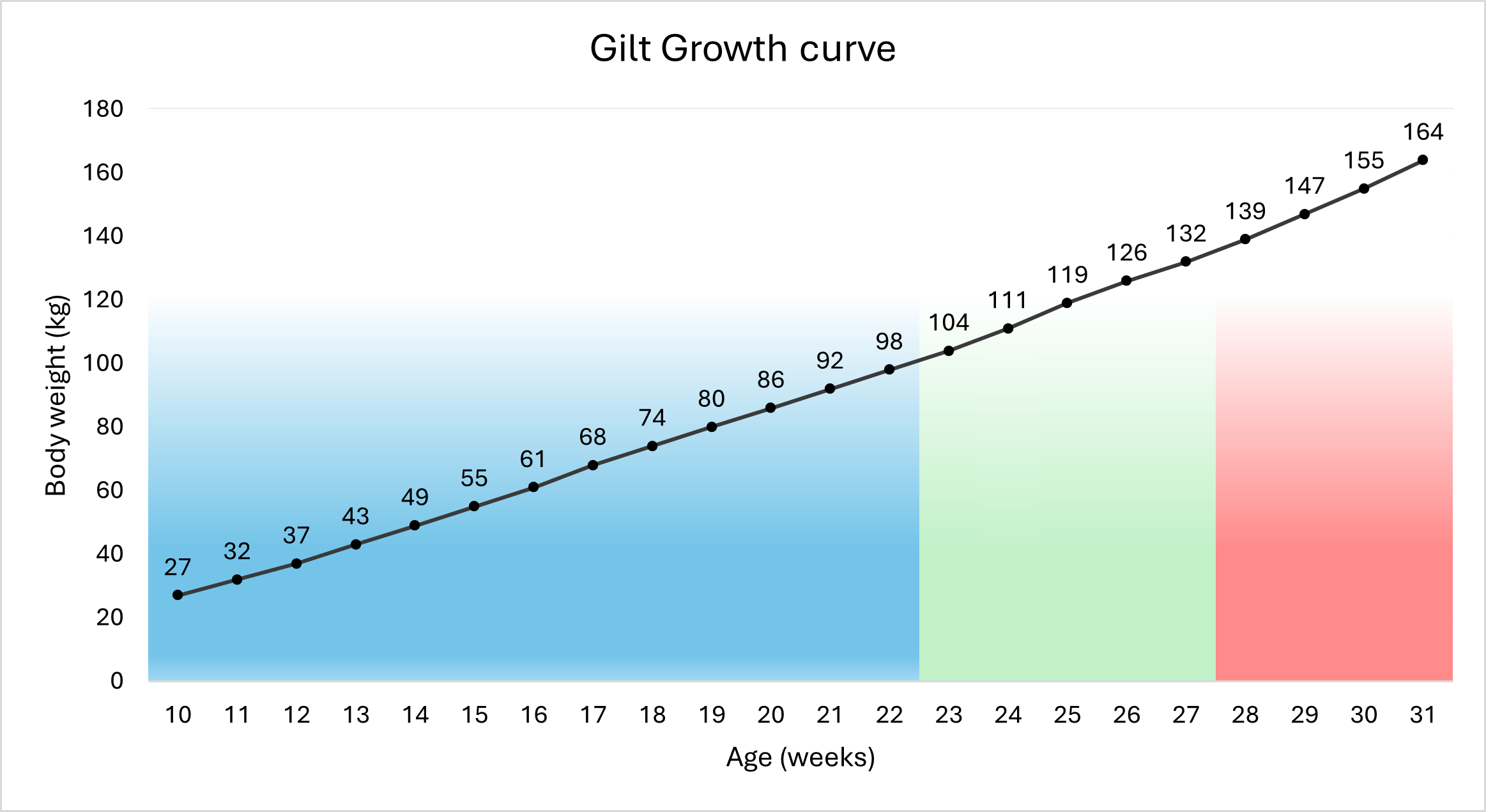
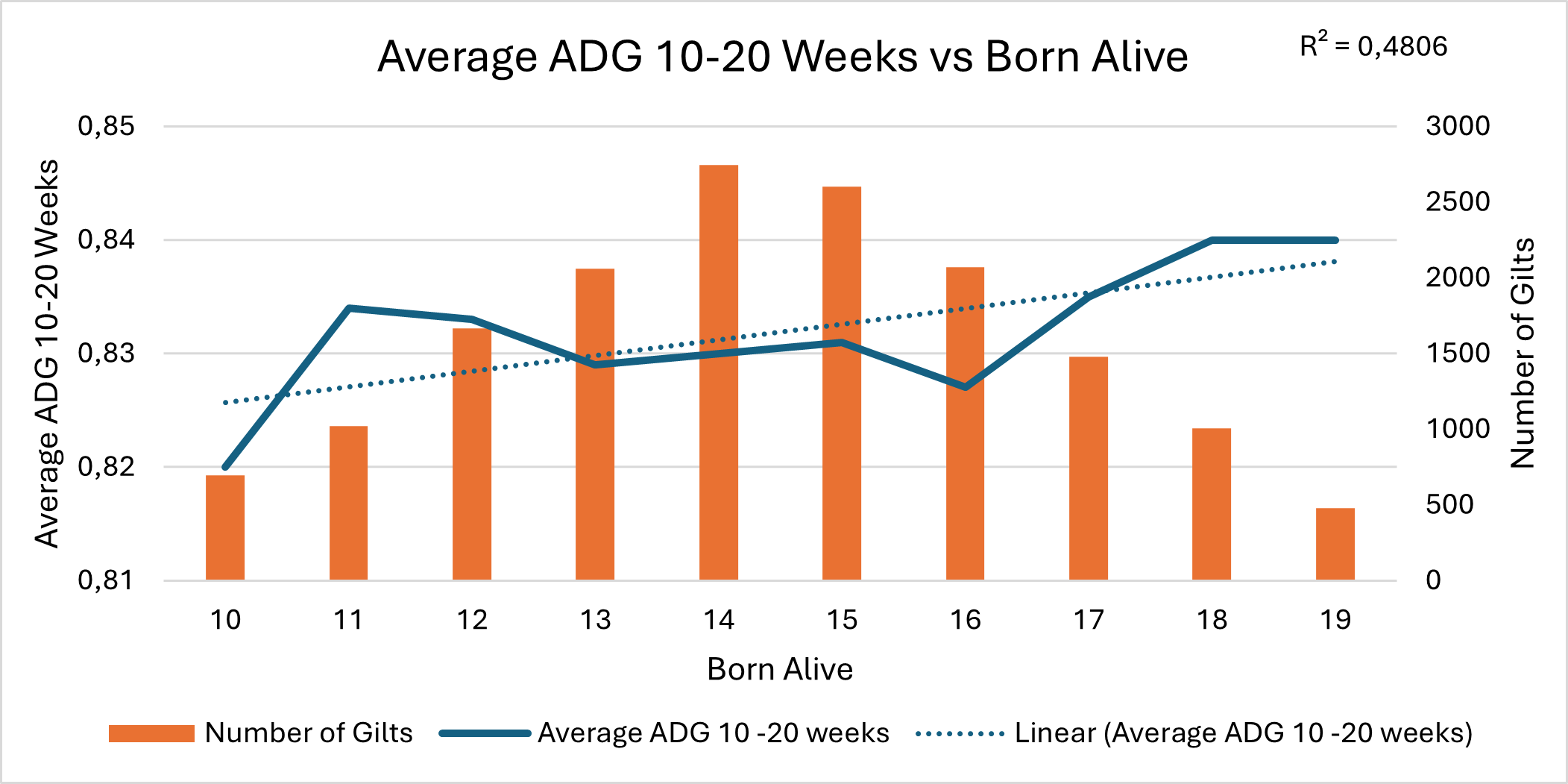
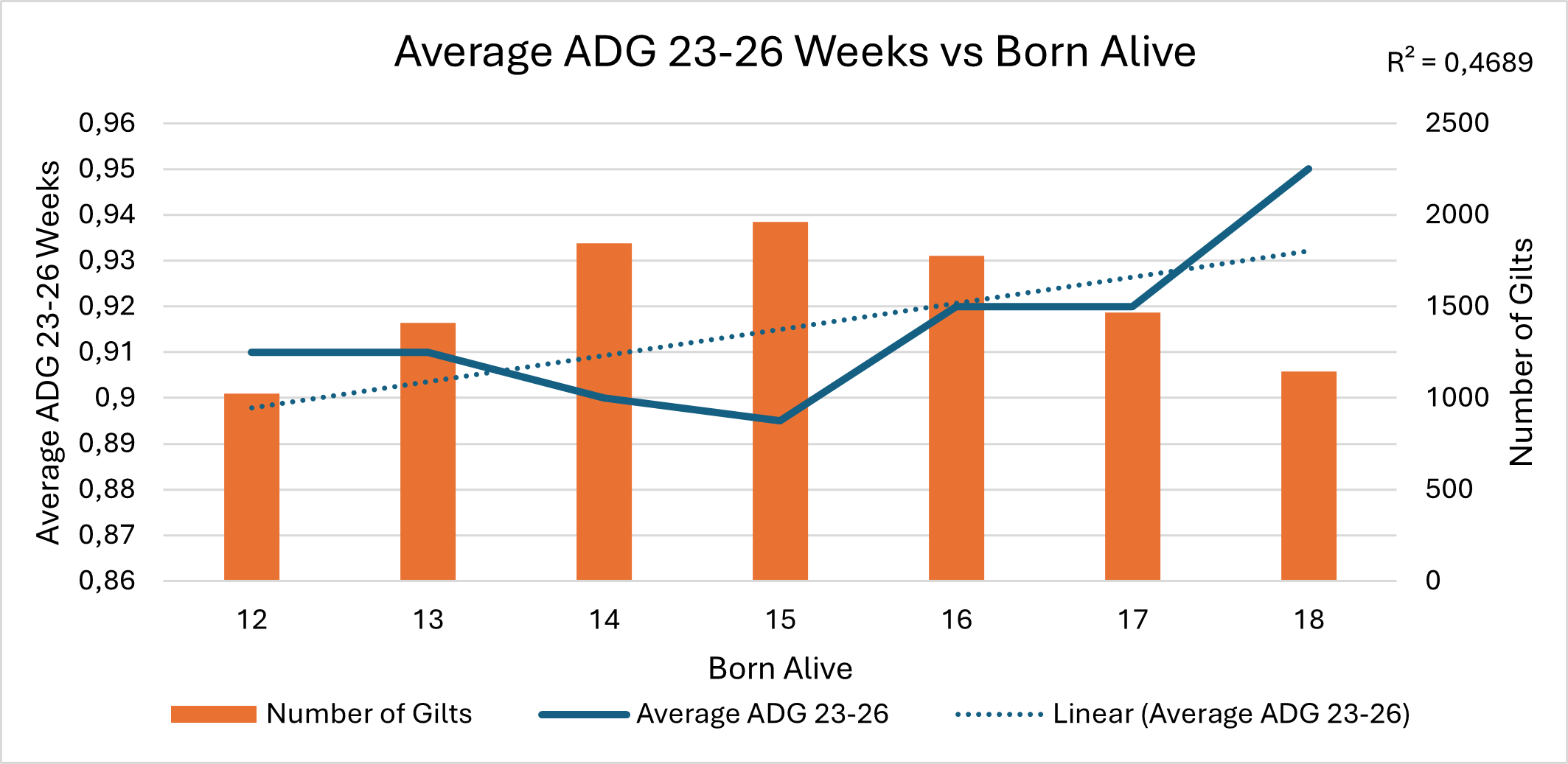
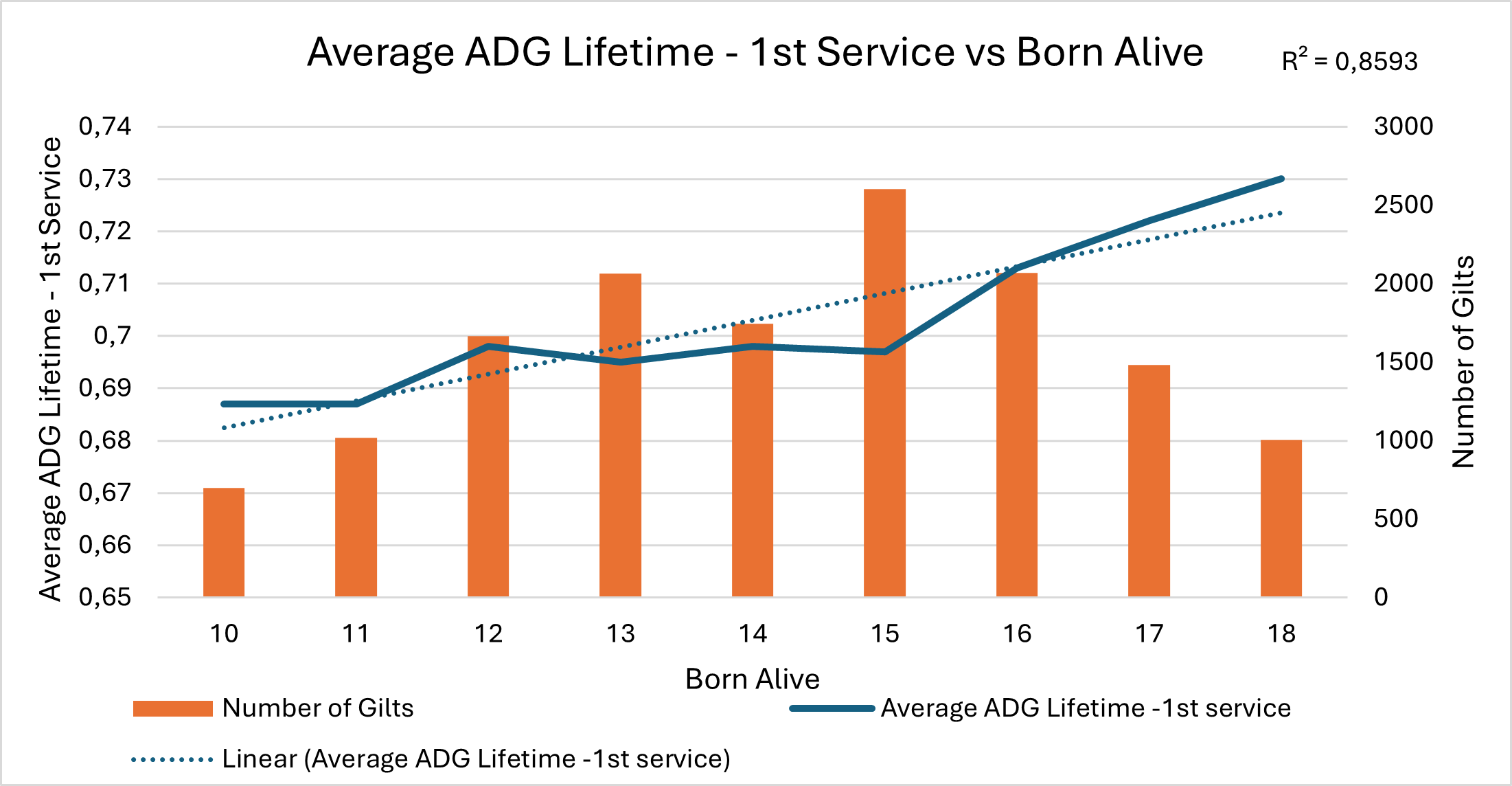
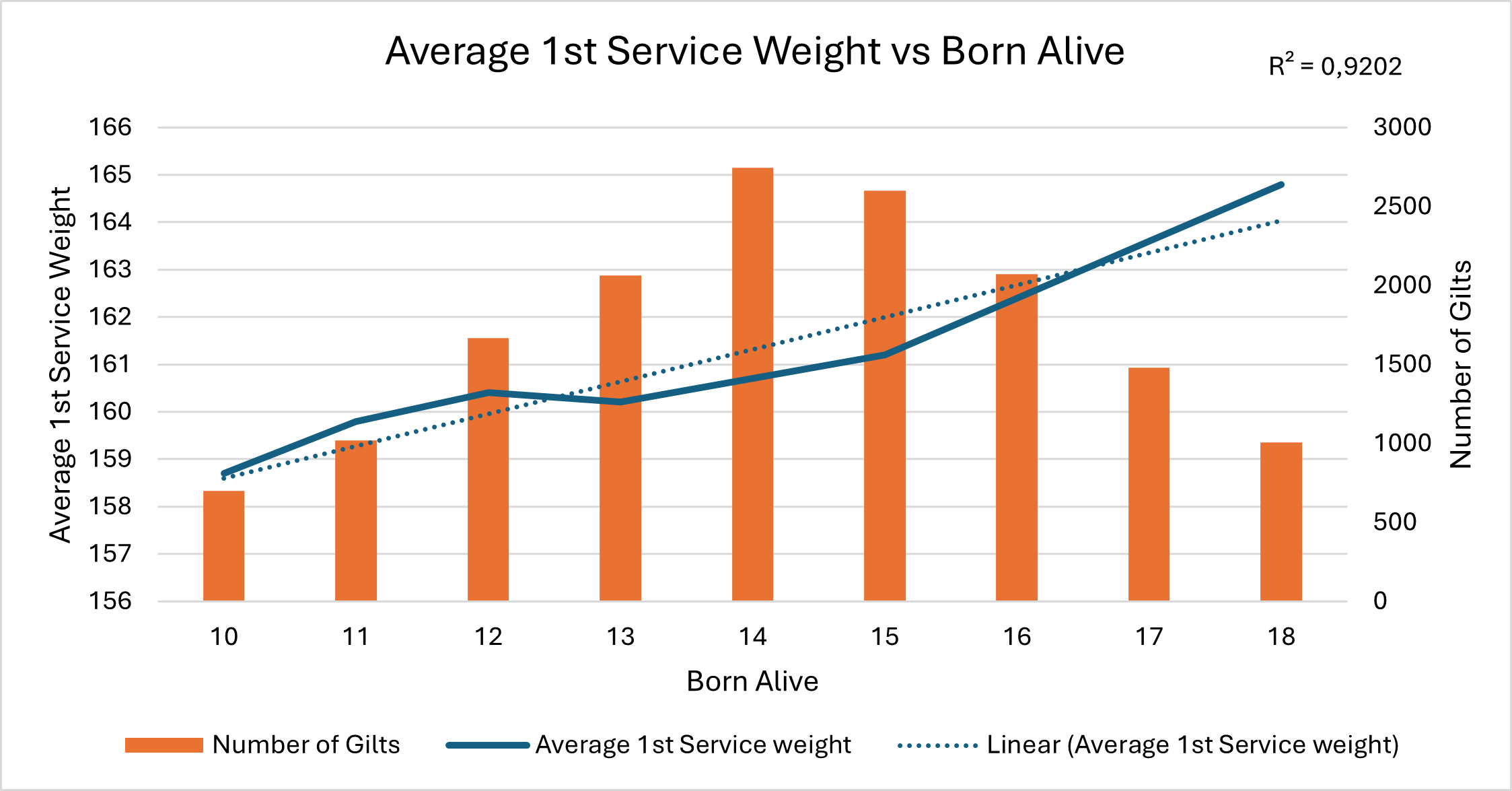
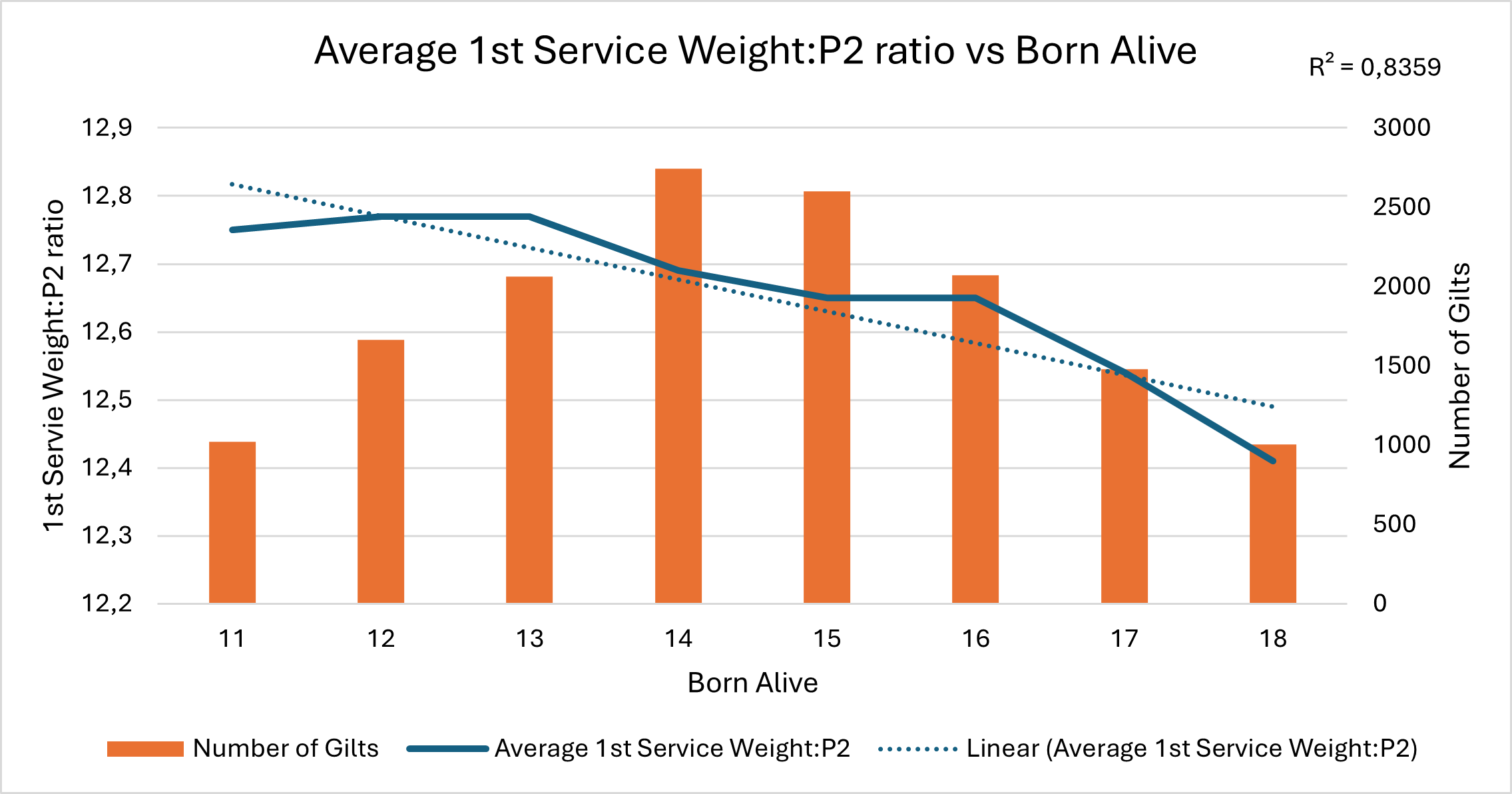
Target weight at service should be >160 kg at first service for improved litter size. This ensures sufficient body reserves and adequate physiological development to sustain gestation through multiple parities.
Final Reflections: Building Sows, Not Just Gilts
Gilts are the future foundation of the sow herd. If the goal is to improve born-alive numbers, extend sow longevity, and reduce involuntary culling, then success must begin well before insemination.
A successful gilt development program focuses on:
• Phase-specific feeding plans aligned with physiological development.
• Continuous monitoring to enable early interventions and adjustments as needed.
• Improved data collection systems by automating data recording we remove human error and reduce labour costs, making regular monitoring more feasible.
Gilt development is not just another production phase, it is a strategic, long-term investment. When done correctly, it leads to larger litters, improved sow retention, and more pigs born per sow’s lifetime. In today’s competitive production landscape, that is the kind of sustainable growth every system should strive for.
Monteiro, M. S., Carnevale, R. F., Muro, B. B. D., Mezzina, A. L. B., Carnino, B. B., Poor, A. P., Matajira, C. E. C., & Garbossa, C. A. P. 2025. The Role of Nutrition Across Production Stages to Improve Sow Longevity. Animals 15, 189 https://doi.org/10.3390/ani15020189.
Mroz, Z., Jongbloed, A. W., Lenis, N. P., & Vreman, K. 1995. Water in Pig Nutrition: Physiology, Allowances and Environmental Implications. Nutr. Res. Rev. 8, 137–164 https://doi.org/10.1079/nrr19950010.
Roongsitthichai, A., & Tummaruk, P. 2014. Importance of Backfat Thickness to Reproductive Performance in Female Pigs. The Thai Journal of Veterinary Medicine 44, 171–178 https://doi.org/10.56808/2985-1130.2557.
Shannon, M. 2011. Nutrition and Feeding for Optimum Reproductive Performance. Internet.
Tokach, M. 2000. The role of nutrition and the feeding program on gilt longevity.
